
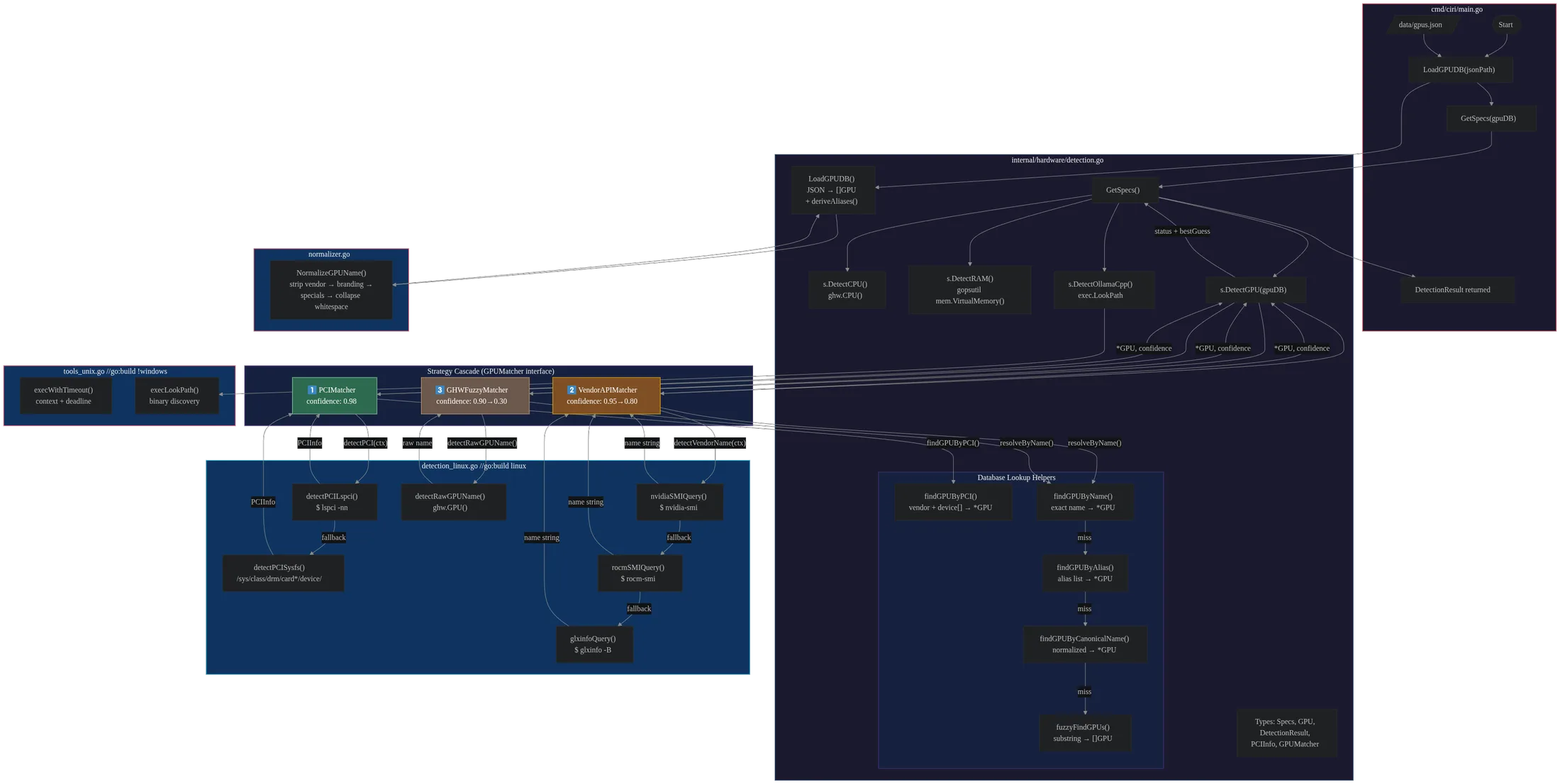
Three-tier GPU matching
PCI device identity first, vendor tools second, normalized fuzzy matching last—with confidence carried through the result.
Which open-source LLMs can this machine run—and how fast? CIRI answers with detected hardware, honest memory math, and benchmark-aware estimates.
GO · BUBBLE TEA · GHW · EMBEDDED DATAModel pages list parameters and quantization, but users still need to translate that into VRAM pressure, system-memory spill, and expected tokens per second on their exact hardware.
CIRI brings hardware detection, a model catalog, benchmark data, and a transparent prediction cascade into one cross-platform terminal interface.

PCI device identity first, vendor tools second, normalized fuzzy matching last—with confidence carried through the result.
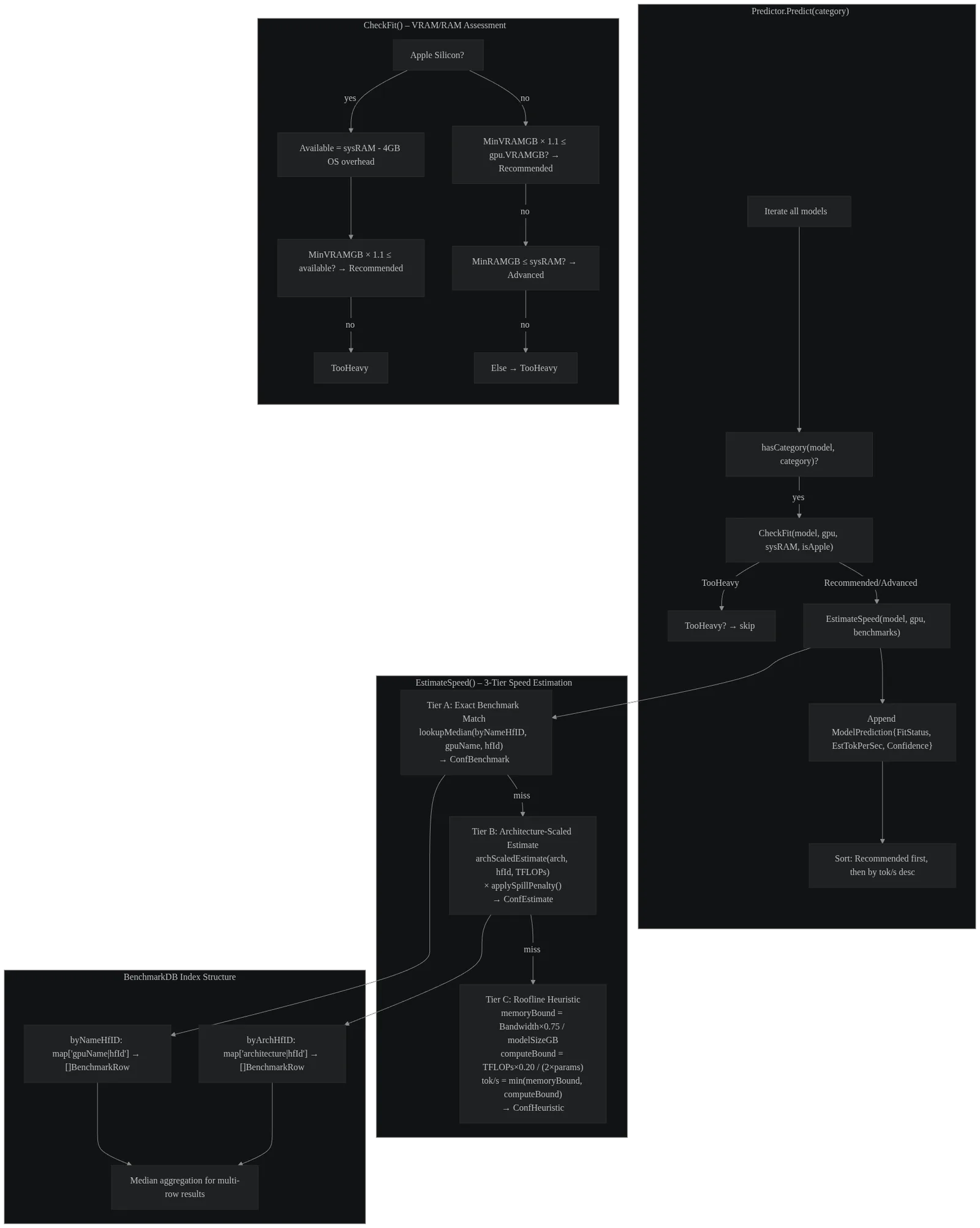
Fit uses the larger of catalog VRAM and calculated weight size, adds a 10% buffer, and treats Apple unified memory separately.
Speed estimates prefer exact benchmark matches, then architecture-family scaling, then a transparent bandwidth/compute heuristic.
CIRI is MIT licensed. Its datasets are embedded into the binary, so the core workflow runs without a hosted service.
go install github.com/cezaryt5/ciri/cmd/ciri@v1.0.0